Ras Al Khaimah Travel Guide: Mountains, Forts and Beaches
Ras Al Khaimah guide: Jebel Jais and the world’s longest zipline, Dhayah Fort, the ghost village of Al Jazirat Al Hamra, beaches and getting there.

Plan a day in Sharjah: the best museums, the restored heritage area, the Blue Souk and Rain Room, Mleiha, local rules on dress and alcohol, and getting there.
Sharjah sits right next to Dubai, but it feels like a different trip: fewer skyscrapers, more museums, restored old quarters and a quieter, family atmosphere. Named UNESCO’s Arab Capital of Culture in 1998 and World Book Capital in 2019, it’s the place to go in the UAE for history, art and Islamic culture, and the highlights fit comfortably into a day trip from Dubai.
| Topic | Details |
|---|---|
| Best for | Museums, heritage, art and souks |
| From Dubai | 30 minutes to well over an hour by road, depending on traffic |
| Time needed | One full day; two if you add Mleiha |
| Best months | October to April |
| Alcohol | Not sold or served anywhere in the emirate |
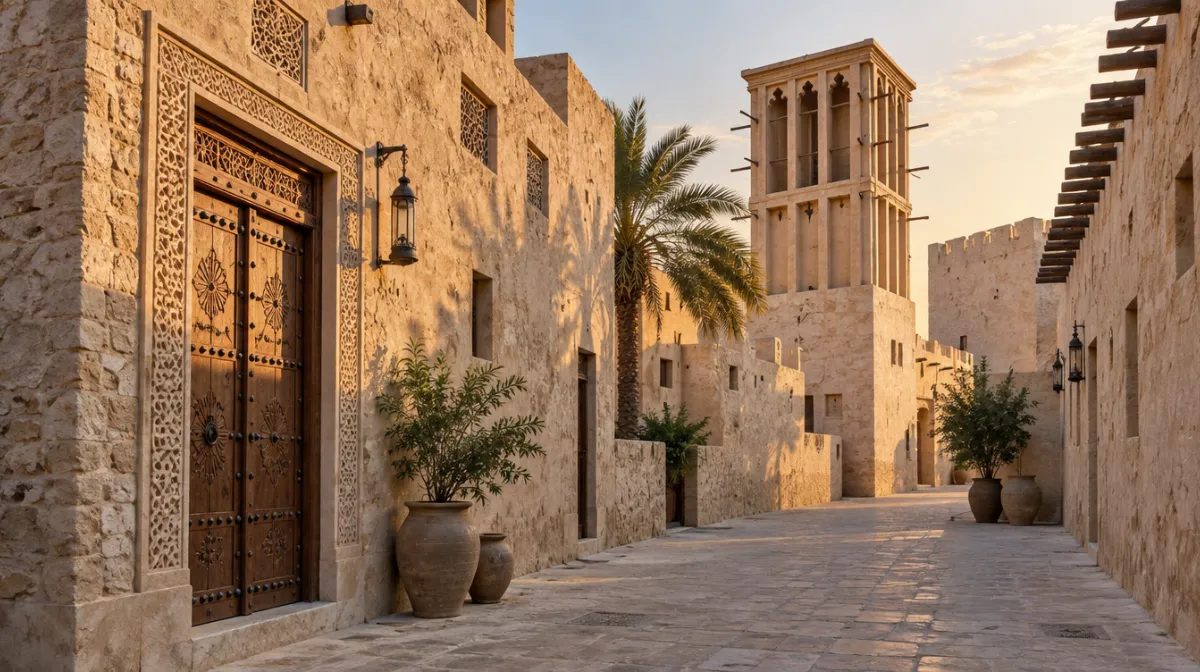
Start in the restored old town around Al Hisn, the fort that was once the seat of the ruling family. Lanes of traditional coral-stone houses, wind towers and carved wooden doors lead to small heritage museums, cafés and Souq Al Arsah, one of the oldest markets in the country. Mornings are quiet and cool enough for wandering.
On the Corniche, in a former souk building crowned by a golden mosaic dome, this museum covers Islamic faith, science and art, from astrolabes and early maps to calligraphy, ceramics and textiles. Allow at least two hours: it’s one of the clearest introductions to Islamic culture anywhere in the Gulf.
The Sharjah Art Museum and the galleries of Sharjah Art Foundation, spread through restored buildings in the old town, show modern and contemporary art from the Arab world and beyond. The foundation also organises the Sharjah Biennial, a major international art event held roughly every two years.
Run by Sharjah Art Foundation, the Rain Room is a permanent installation where rain pours down all around you but stops wherever you step, thanks to motion sensors. Visits are short and timed, so book a slot before you go.
Known as the Blue Souk for its tiled facade, the Central Souk sells gold, jewellery, carpets, antiques and souvenirs across two long halls. Bargaining is expected, except on the gold itself: its price follows the daily gold rate, but the making charge on top is usually negotiable.
On Khalid Lagoon, Al Noor Island combines landscaped gardens, art installations and a butterfly house, while the nearby Al Majaz Waterfront has parks, restaurants and evening fountain shows. Both are at their best after sunset.
These neighbouring attractions at Al Khan cover the region’s seafaring and pearling past and the marine life of the Gulf. They’re a good indoor choice with children; see our guide to the UAE with kids for more family ideas.
About an hour inland, Mleiha is a desert area where archaeologists have found evidence of human presence stretching back well over 100,000 years. The Mleiha Archaeological Centre explains the finds, and guided activities include hikes to Fossil Rock, dune drives, camping and stargazing.
Most rules apply across the country, just enforced with a lighter touch in Dubai; our guide to UAE laws for tourists sets them out.
Sharjah’s hotels are often cheaper than Dubai’s, and staying here suits a culture-focused trip. If most of your plans are in Dubai, though, rush-hour traffic makes Sharjah a poor base: stay in Dubai (see where to stay in Dubai) and visit Sharjah for the day.
October to April brings the best walking weather. February usually brings the Sharjah Light Festival, when landmarks are lit up with projections, and November the Sharjah International Book Fair, one of the largest in the world. In summer, the museums make Sharjah a good escape from the heat; see our month-by-month guide.
Yes, especially if you like museums, heritage and art. A day trip covers the highlights, and it’s a welcome change of pace from Dubai.
No. Alcohol isn’t sold or served anywhere in the emirate, including hotels and restaurants.
Loose, lightweight clothing that covers your shoulders and knees. Women don’t need to cover their hair, except when visiting a mosque.

Every article is edited by a human and checked against our editorial policy. Spotted a mistake? Tell us.
Ras Al Khaimah guide: Jebel Jais and the world’s longest zipline, Dhayah Fort, the ghost village of Al Jazirat Al Hamra, beaches and getting there.
Plan a trip to Fujairah and the UAE’s east coast: Snoopy Island snorkelling, Dibba, Al Bidya Mosque, forts, Khor Fakkan, wadis, beaches and getting there.
The best time to visit Dubai and the UAE, month by month: temperatures, crowds, prices, Ramadan, festivals and when the desert season starts.