Desert Safari in Dubai: How to Choose a Good One
How to choose a desert safari in Dubai: evening, morning and overnight options, what’s included, red flags, what to wear and whether dune bashing is for you.

A self-guided Old Dubai walk: Al Shindagha, Al Fahidi’s lanes, the Textile Souk, an abra across the Creek and the Spice and Gold Souks, with timings and tips.
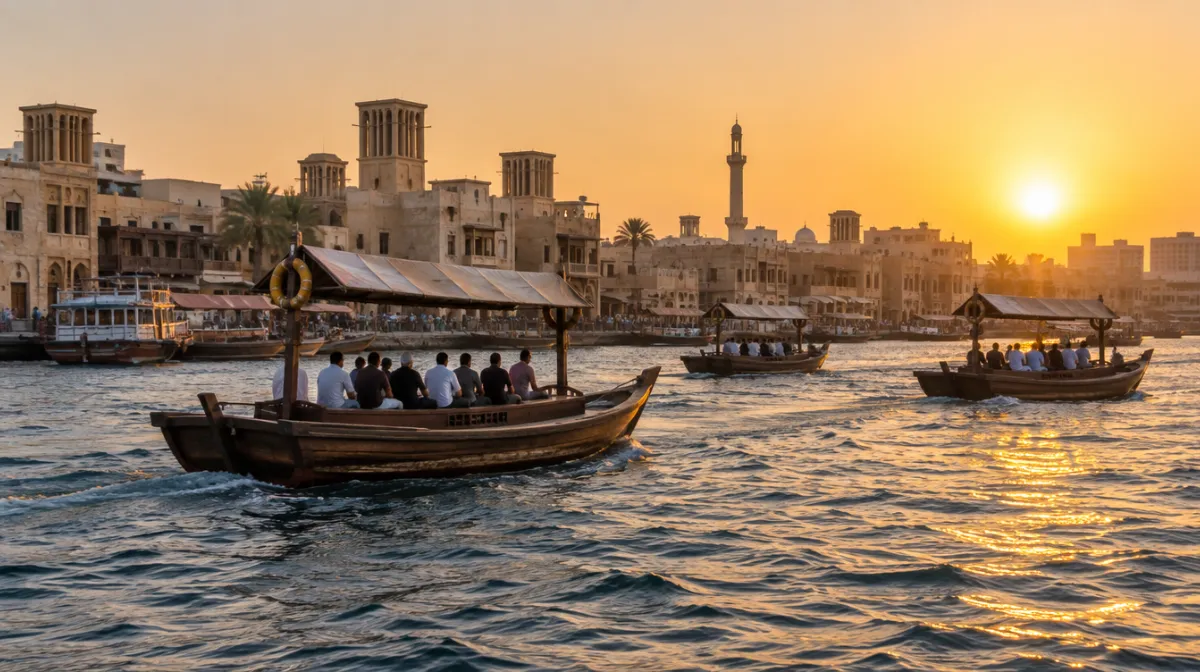
Before the skyscrapers, Dubai was a trading town on the Creek, and that older city is still there: wind-tower houses, busy souks, wooden dhows loading cargo and abras shuttling passengers across the water. This self-guided walk links the highlights of Bur Dubai and Deira in a single, easy route.
| Topic | Details |
|---|---|
| Distance | About 3 to 4 km, plus an abra crossing |
| Time | Three to four hours with stops |
| Start | Al Shindagha Historic District, Bur Dubai |
| Finish | The Gold Souk, Deira |
| Best time | Early morning, or from late afternoon into the evening |
| Cost | Free, apart from museums, food and the abra |
Take the metro’s Green Line to Al Ghubaiba, or a taxi to Al Shindagha. From there the whole route is on foot, with one boat ride.
At the mouth of the Creek, this restored district was where Dubai’s ruling family and leading merchants once lived. Al Shindagha Museum tells the city’s story through restored houses and pavilions, including a section devoted to perfume and its place in Emirati life. Allow an hour if you go inside.
Walk south along the waterfront, past traditional boats and creekside cafés, to the covered Bur Dubai Souk, better known as the Textile Souk. Its wooden-roofed lanes are full of fabrics, pashminas, lanterns and souvenirs. Bargaining is expected, and a firm, friendly “no, thank you” is enough for persistent sellers. Decline anyone offering counterfeit goods: buying fakes can land you in trouble.
A few minutes inland, the Al Fahidi Historical Neighbourhood, also known as Al Bastakiya, is a maze of sand-coloured lanes and restored houses topped with wind towers, the traditional form of air conditioning. Small museums, galleries and courtyard cafés hide behind carved doors. The Sheikh Mohammed Centre for Cultural Understanding is based here and hosts cultural meals and tours with Emirati hosts; book ahead.
Al Fahidi Fort, built in 1787 and the oldest standing building in Dubai, housed the Dubai Museum until it closed in 2021 for a major restoration. At the time of writing, it was expected to reopen soon but no date had been announced, so check before you plan around it. The exterior is still worth seeing.
Head back to the waterfront and the Bur Dubai abra station. Traditional wooden abras cross the Creek to Deira every few minutes; the ride takes about five minutes and costs a dirham or two in cash. Sit near the edge for the best views of the dhows and the old skyline.
From the Deira Old Souk abra station, step straight into the Spice Souk, a few lanes of sacks piled with saffron, frankincense, dried limes, dates and dried fruit. Traders are happy to explain what’s what. Buy saffron only from shops that let you see what you’re getting, and compare prices before you haggle.
A short walk away, the Gold Souk’s covered street is lined with hundreds of shops glittering with gold, diamonds and silver. Gold is priced by weight at the daily rate, plus a making charge for the craftsmanship, which is where you can negotiate. Even if you don’t buy, it’s a spectacle.
Walk back towards the Creek to watch the wooden dhows loading cargo along the Deira wharves, a scene that has barely changed in decades. From here, the Green Line metro stations at Al Ras and nearby stops take you back across the city.
See our month-by-month guide for temperatures.
The route passes courtyard cafés in Al Fahidi, simple creekside restaurants and busy shawarma and snack shops around the souks. Our daily budget guide shows how cheaply you can eat in this part of town.
The walk makes an ideal first morning in Dubai, and Old Dubai is also close enough to the airport for a long stopover; see our Dubai layover guide. It’s part of our 5-day Dubai itinerary, and most of it appears on our list of free things to do in Dubai.
About three to four hours at a relaxed pace, including the abra crossing and a museum or café stop.
The museum in Al Fahidi Fort closed in 2021 for restoration. It was expected to reopen, but check the latest news before you visit.
The traditional abra costs a dirham or two per person, paid in cash on board.

Every article is edited by a human and checked against our editorial policy. Spotted a mistake? Tell us.
How to choose a desert safari in Dubai: evening, morning and overnight options, what’s included, red flags, what to wear and whether dune bashing is for you.
A guide to Hatta, Dubai’s mountain escape: the dam and kayaking, hiking and mountain biking trails, the heritage village, getting there and the best time to go.
Planning Dubai with kids: family-friendly areas, theme parks and water parks, beaches, indoor attractions for hot days and keeping kids safe in the heat.